
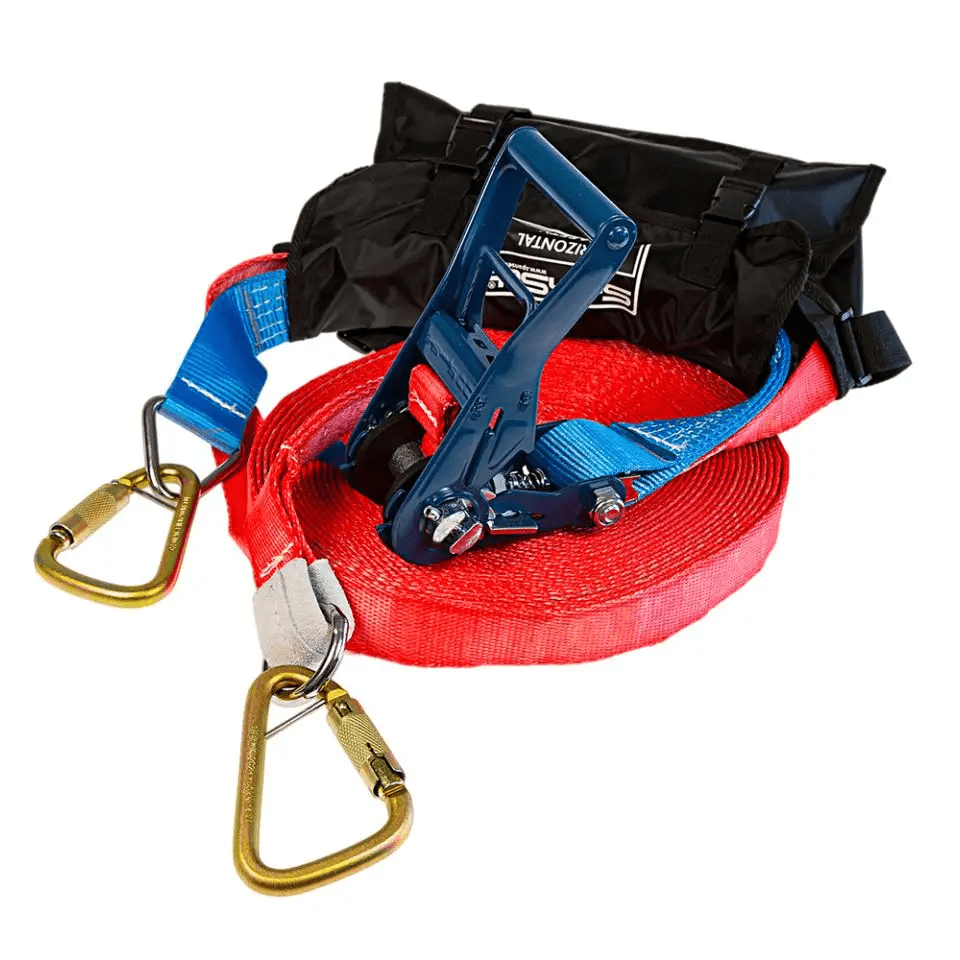
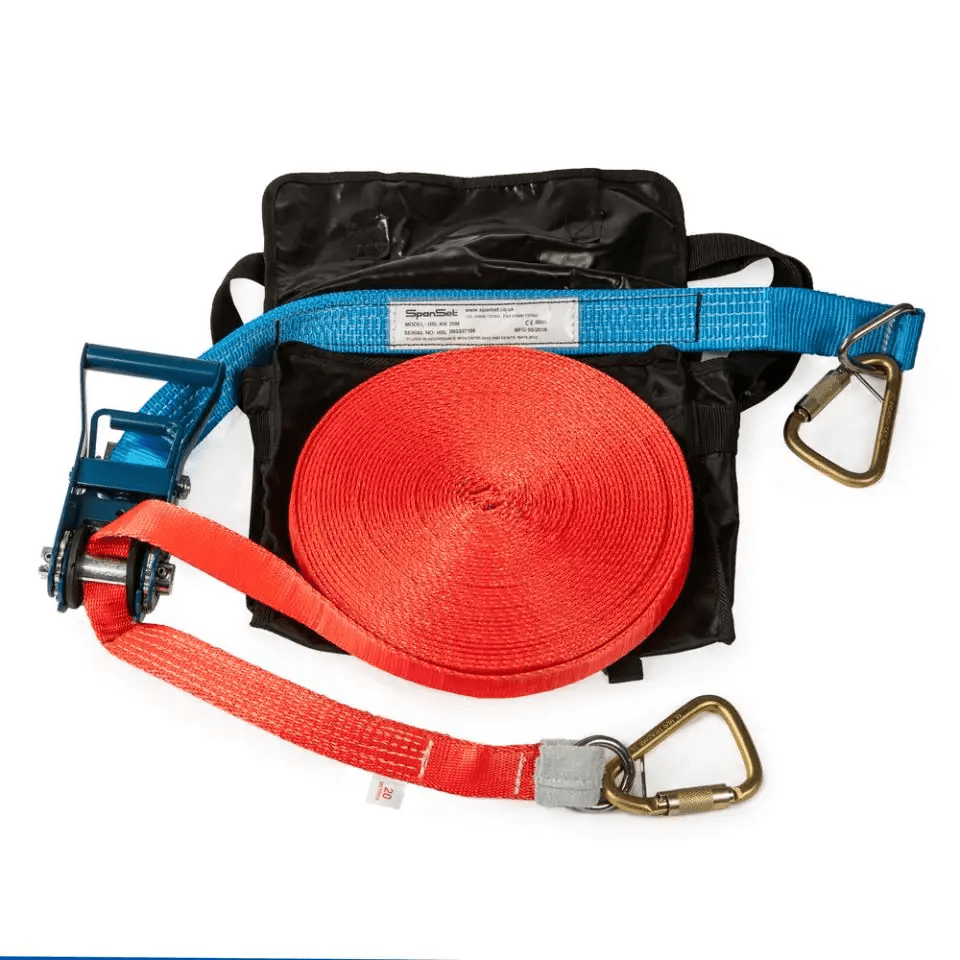
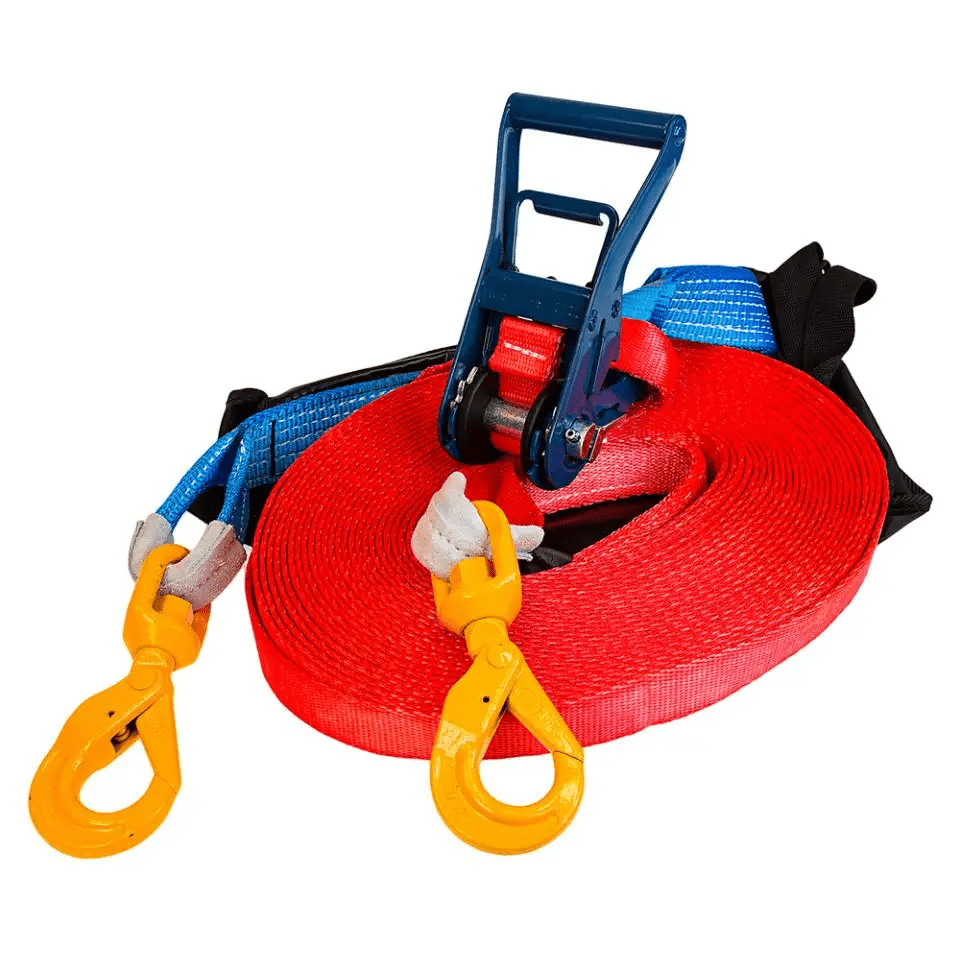
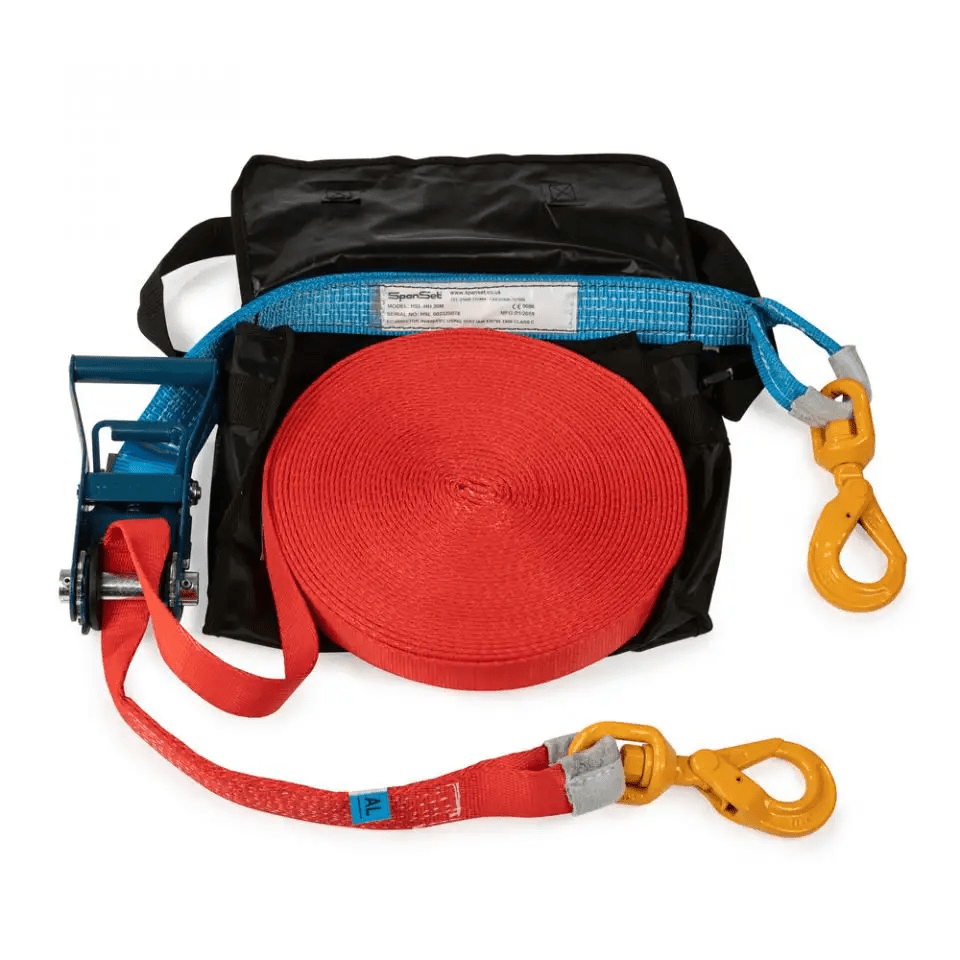
At SecureHeights, we supply certified horizontal systems built for reliability, compliance, and long-term performance across demanding work-at-height environments.
Horizontal Systems: Selection & Types
| System Type | Description | Protection Method | Typical Installation | Key Advantage |
|---|---|---|---|---|
| Temporary horizontal lifelines | Portable lifeline systems for short-term use | Fall arrest or fall restraint | Temporary anchors, beams, structures | Fast setup and removal |
| Cable horizontal lifeline systems | Flexible cable-based systems spanning long distances | Fall restraint or fall arrest | Roofs, steel structures, long perimeters | Covers large working areas |
| Rail (rigid) systems | Fixed rail systems providing guided movement along a structure | Fall restraint or fall arrest | Roofs, façades, industrial structures | Smooth movement with minimal deflection |
Continuous Protection Along the Working Area
A horizontal safety line allows users to travel along a defined route while remaining securely connected at all times. Integrated travellers or trolleys pass intermediate supports smoothly, eliminating the need to disconnect and reconnect when moving across the structure.
Each safety line system is designed to work with compatible harnesses and lanyards, forming part of a complete height safety setup that supports both fall restraint and fall arrest configurations.
Systems for Rooftop & Structural Applications
A properly designed horizontal lifeline system can be installed on a wide range of structures, including flat roofs, pitched roofs, and complex building layouts. For rooftop environments, roof safety line systems are commonly used to support safe access for maintenance, inspections, and plant servicing without compromising roof integrity.
Depending on system configuration and risk assessment, a horizontal safety line system can either restrict access to hazards or safely arrest a fall should one occur.
Fall Restraint & Fall Arrest Protection
Horizontal systems can be configured for either fall restraint or fall arrest, depending on the application and risk assessment.
Fall restraint systems are designed to prevent the user from reaching a fall hazard by limiting movement to within a safe working area. These are commonly used on rooftops and open structures where edge access needs to be controlled.
Where fall risk cannot be fully eliminated, fall arrest systems are designed to safely stop a fall and manage the forces generated during the event. These systems must be correctly specified and installed to ensure safe load distribution and user protection.
In both cases, proper system design, installation, and regular inspection are essential to maintain compliance and ensure reliable performance over time.
Expert Support from SecureHeights
Selecting the right horizontal system depends on structure type, usage frequency, and safety objectives. Our experienced team can help you choose and configure a solution that aligns with your site requirements and regulatory responsibilities.
Protect Your Team Along Every Step
Explore our range of horizontal systems at SecureHeights and create a safer working environment at height. Order online today or contact our specialists for expert guidance on selecting the right horizontal safety solution for your project.